
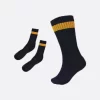


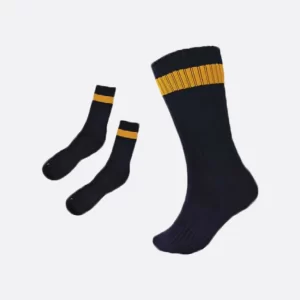
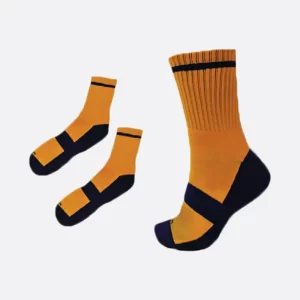
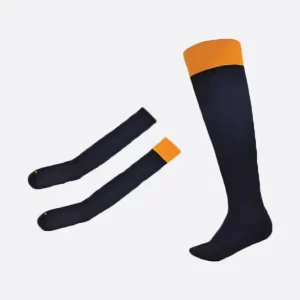
SPORTS SOCKS YELLOW NAVY BLUE KURD INTERNATIONAL BESPOKE SPORTSWEAR
Kurd International Sports Short Socks Yellow Navy Blue are engineered for both performance and comfort, incorporating moisture-wicking fabrics, targeted cushioning, and, in some cases, they are commonly crafted from synthetic materials such as nylon and polyester, which effectively keep feet dry and cool during physical activity. When people think about athletic gear, their minds often jump to high-performance shoes, breathable tops, or advanced compression wear. Rarely do sports socks get the attention they deserve. But these simple pieces of fabric play a crucial role in comfort, performance, and injury prevention for athletes at every level.
What Are Sports Socks?
Sports socks are specifically designed to be worn during physical activity. Unlike everyday socks, they are made with performance-enhancing features such as:
-
Moisture-wicking fabrics
-
Compression zones
-
Cushioned soles
-
Arch support
-
Seamless construction
These features vary depending on the sport, intensity, and personal needs of the athlete.
The Importance of the Right Sports Socks
1. Moisture Management
During exercise, feet sweat heavily. Standard cotton socks retain moisture, which can lead to blisters, bacterial growth, and discomfort. Sports socks are made with synthetic or blended fibers—like polyester, nylon, or merino wool—that wick moisture away from the skin, keeping feet dry and reducing friction.
2. Injury Prevention
High-impact sports can take a toll on the feet and joints. Sports socks with strategic padding can absorb shock, reduce the risk of blisters, and support vulnerable areas like the heel and arch. Some models even offer light compression, which may improve circulation and help prevent swelling or fatigue during long workouts.
3. Better Fit, Better Performance
A good pair of sports socks stays in place. Features like ribbed cuffs, reinforced heels, and ergonomic designs ensure that the socks don’t bunch up or slip during movement—common causes of blisters and discomfort. A proper fit also enhances the feel of your shoes and allows more efficient energy transfer in activities like running or jumping.
Types of Sports Socks
Different sports call for different types of socks. Here are some common variations:
• Running Socks
Designed to minimize friction and maximize breathability. Often include mesh ventilation zones and reinforced heels/toes.
• Basketball Socks
Usually thicker with extra padding for shock absorption and ankle support. Mid or crew-length is common.
• Football/Soccer Socks
Long socks that cover shin guards, made with breathable material and elastic to stay in place.
• Cycling Socks
Thin, lightweight, and breathable. Designed to fit snugly and keep feet cool in tight cycling shoes.
• Compression Socks
Used in many sports and recovery routines. These apply gentle pressure to improve circulation and reduce muscle fatigue.
Material Matters
Choosing the right material is critical. Here’s a quick overview:
-
Polyester/Nylon: Durable, moisture-wicking, quick-drying.
-
Merino Wool: Natural fiber, regulates temperature, soft, and odor-resistant.
-
Spandex/Lycra: Offers stretch and shape retention.
-
Blends: Often used to combine the strengths of multiple materials.
Avoid 100% cotton for sports—it holds moisture and increases the risk of blisters.
Sustainability and Innovation in Sports Socks
With growing awareness of sustainability, many brands are offering sports socks made from recycled materials or sustainably sourced wool. Some are incorporating antimicrobial treatments to reduce odor and bacterial buildup, while others are experimenting with 3D knitting and personalized compression zones based on biomechanical data.
Smart socks are also emerging in the market, embedded with sensors that track foot pressure, stride, and even fatigue—adding a digital edge to traditional athletic gear.
Reviews
There are no reviews yet.